
WELCOME BONUS 300%
UP TO €2000 + 100
FREE SPINS
UP TO €2000 + 100
FREE SPINS
Home → Sports Betting
Sports betting at Jolly Sweeps Casino
Converting Odds of 2.50 Into 40%
Decimal odds of 2.50 convert to 40 percent through the same division, 1 ÷ 2.50 = 0.40. The same price appears as 3/2 in fractional notation, meaning €1.50 of profit for every €1.00 staked, and 3/2 + 1 = 2.50 back in decimal. In American moneyline terms that is +150, since 150 ÷ 100 + 1 = 2.50.
The favourite in the match is listed at 1.67 in decimal, 4/6 in fractional and −150 in American notation, where 100 ÷ 150 + 1 = 1.67. Whichever format a bettor reads, the payout on a €10.00 stake is identical: €25.00, split into the €10.00 stake and €15.00 net profit. Format choice changes the display, not the 40 percent break-even rate.
A single at 2.50 and a double chance at 1.30 illustrate the spread. The double chance covers two of three outcomes, so its implied probability is 1 ÷ 1.30 = 77 percent, far above the 40 percent attached to the outright price. A €10.00 stake on the 1.30 line pays €13.00, which is €3.00 of net profit.
Tennis: 120 to 200 Markets per Match
Tennis at ATP and WTA level carries 120 to 200 markets per match, while Challenger events offer a slimmer 30 to 60. The difference is one of depth rather than format: the top tier prices set and game bets alongside the match winner market. A bettor comparing a Grand Slam fixture with a lower-tier match sees the market count fall by more than half.
The margin on a tennis match winner market sits at 3 to 6 percent, and set and game bets run at 6 to 8 percent. On €100.00 of stakes in the match winner market, that is roughly €3.00 to €6.00 retained by the bookmaker on average. The 120-market ceiling applies to the biggest ATP and WTA fixtures, not to every round.
A single on a tennis match at 2.50 returns €25.00 from a €10.00 stake, which is €15.00 of net profit. Tennis also fits the bet builder format, where 2 to 8 selections from one match are combined with correlation-adjusted odds. Home win, over 2.5 goals and both teams to score together come to about 4.50, so €10.00 pays €45.00.
In-Play Margins Run 1–3 Points Higher
Table tennis shows the clearest live premium: 20 to 40 markets per match, mostly set and point bets, with a margin of 6 to 10 percent that often climbs above 10 percent in running. The pre-match range starts at 6 percent, so live pricing adds roughly 1 to 3 percentage points on the same type of market. Hundreds of matches run every day on that schedule.
Cricket behaves in a comparable way. The match winner market sits at 5 to 9 percent, player bets at 8 to 12 percent, and the gap widens with the format. On €100.00 of stakes in the match winner market, 5 to 9 percent is €5.00 to €9.00 retained, and a live price at the top of the range pushes that figure higher still.
Ice hockey keeps a tighter book. An NHL or DEL game offers 80 to 150 markets, with the main market at 4 to 7 percent and period bets at 7 to 10 percent. The 1 to 3 point live premium applies across all three sports.
Outrights Settle Only After Months
An outright bet runs until the competition ends, so settlement can be months after the stake is placed. Tennis tournaments resolve within a fortnight, but a league outright tied to ice hockey or cricket runs across a full season. The 20 to 40 table tennis markets per match settle the same day, which is the opposite end of the scale from a season-long position.
A single at 2.50 on a long outright ties up €10.00 for the duration and returns €25.00 if it lands, meaning €15.00 of net profit. The same €10.00 placed on a single table tennis market settles within hours. The capital is identical; only the holding period differs, and that period is what defines an outright.
Boxing outrights are shorter, with 25 to 50 markets per fight and a winner market at 5 to 8 percent, while round bets run at 9 to 13 percent. Rugby outrights stretch across 60 to 120 markets per match in the major leagues and a full season of fixtures. A bettor weighing an outright against a match bet is trading a quick settlement for a longer wait.
Sports, markets and margins in the betting offer
| Sport | Markets per Match | Margin | Live Betting | Highlight |
|---|---|---|---|---|
| Esports (CS2, Dota 2, LoL) | 40–120 markets per match at major tournaments, 10–25 at small events | 4–7% at top CS2 tournaments, 6–10% for Dota 2 and side markets | yes | Map handicaps and round totals are the core markets |
| Rugby | 60–120 markets per match in the major leagues | 5–8% in the main market, 8–11% on try scorer bets | yes | Handicap matters more than the plain winner bet |
| Ice hockey | 80–150 markets per NHL game | 4–7% in the main market, 7–10% on period bets | yes | Three-way market covers regulation time only |
| Basketball | 150–250 markets per NBA game, including player props | 3–5% on handicap and over/under, 4–6% on the moneyline | yes | Handicap and totals rather than the plain winner bet |
| Football | over 200 markets for top matches, 60–100 in smaller leagues | 4–7% in the pre-match 1X2 market, 6–9% live | yes | Three outcomes, a draw is always possible |
| Volleyball | 40–80 markets per match in the top leagues | 5–8% in the match winner market, 8–11% on set scores | yes | Set bets and point totals dominate |
| Cricket | 80–150 markets per match, fewer in second-tier T20 leagues | 5–9% in the match winner market, 8–12% on player bets | yes | The margin depends heavily on the format |
| Formula 1 | 60–120 markets per race weekend, including qualifying | 3–5% on driver head-to-heads, 12–20% on race winner outrights | yes | Head-to-heads are better value than outrights |
| Table tennis | 20–40 markets per match, mostly set and point bets | 6–10%, often above 10% live | yes | Hundreds of matches every day, heavily live-focused |
Working Out the 1X2 Margin Yourself
A 1X2 market margin is the bookmaker's built-in cut on the home, draw and away prices, and it is easiest to see with a moneyline example from basketball, where the margin runs 4-6% on the moneyline. Add the implied probabilities of all three outcomes and the total will exceed 100%; the excess is the margin. A 6% margin means €100.00 of stakes costs €6.00 on average, so only €94.00 flows back as expected value.
Basketball carries 3-5% on handicap and over/under but 4-6% on the moneyline, so the plain winner bet is the more expensive route to the same match. On a €10.00 stake at even odds, the difference between a 3% and a 6% margin is roughly €0.30 of expected cost. Handicap and totals therefore sit lower in cost than the outright 1X2-style pick.
Mixed martial arts shows how far a margin can stretch: 5-8% in the winner market and 8-12% on method of victory, so the more exotic the market, the wider the built-in cut. A reader comparing promotions should run the same three-way sum on each site before staking. The lowest of the three totals is the cheapest place to put the same €10.00.
The Nine Outcomes of Half-Time/Full-Time
Half-time/full-time betting splits each match into nine outcomes because the half-time score and the full-time score are treated as two separate events. In the European handicap, a whole-goal head start keeps the draw as a third outcome, so a handicap of 0:1 in favour of the underdog at odds of 2.20 returns €22.00 on a €10.00 stake, a net profit of €12.00.
Double chance covers two of the three possible outcomes at once, which lowers the odds considerably: 1X, meaning home win or draw, is priced at 1.30, so €10.00 returns €13.00 and a net profit of €3.00. Combined with the half-time split, the nine outcomes each carry their own price, and the margin on these markets is typically 10–20%, so €100.00 of stakes costs €10.00 to €20.00 on average.
A single bet on exactly one event pays the stake multiplied by the odds: at 2.50, €10.00 returns €25.00, a net profit of €15.00. The same 2.50 in fractional terms is 3/2, showing €1.50 of profit per €1.00 staked, while the American moneyline shows +150, and the favourite in that match sits at 1.67, or −150. The nine outcomes therefore span the whole match, not just the final score.
Set Betting and Point Totals in Volleyball
Volleyball set and point markets belong to the group of sports where market depth is modest: table tennis offers 20-40 markets per match, mostly set and point bets, at margins of 6-10% that often run above 10% in play. A set bet covers which side takes a named set, while a point total covers the combined points across the match. Both are priced off the same two-team structure.
The margin on table tennis set and point bets sits at 6-10%, which is far above the 3-5% seen on basketball handicap and over/under. On €100.00 of stakes, a 10% margin costs €10.00 against €3.00 at the low end. That gap is the reason a set bettor should compare the implied total across two or three books before committing.
Ice hockey period bets sit at 7-10%, tennis set and game bets at 6-8%, and rugby try scorer bets at 8-11%, so set-type markets cluster above the main-line margins everywhere. A €10.00 set bet at 2.00 with a 10% margin carries roughly €1.00 of expected cost. In live volleyball the margin can exceed the pre-match level, so the same set bet is dearer once the first point is played.
ATP vs Challenger: 200 Markets Instead of 60
Tennis market depth splits sharply by tour level: ATP and WTA matches carry 120-200 markets, while Challenger events offer only 30-60. The top of that range, 200 markets, is more than triple the Challenger ceiling of 60. A reader who wants player props, set betting and game totals will find the full board only at the higher tier.
The match winner margin on tennis runs 3-6%, while set and game bets sit at 6-8%. On a €10.00 match winner bet at even odds, a 3% margin costs about €0.30 and a 6% margin about €0.60. The wider set and game markets double that cost again, so the extra choice at ATP level comes with a higher price on the secondary lines.
Comparing a 200-market ATP board with a 60-market Challenger board is not only about count: the Challenger card compresses into fewer set and game options. Table tennis, at 20-40 markets per match, sits below both tiers. A €100.00 staked across set bets at an 8% margin costs €8.00 in expected terms, against €3.00 on a 3% match winner line.
Volleyball Match Winner 5-8% vs Set Scores 8-11%
Volleyball-style pricing shows a clear step between the main line and the set markets, and rugby illustrates the same pattern with 5-8% in the main market against 8-11% on try scorer bets. The gap of roughly three percentage points is the premium paid for a narrower, more specific outcome. On €100.00 of stakes, that is €5.00-€8.00 on the winner versus €8.00-€11.00 on the set or scorer side.
Ice hockey repeats the split: 4-7% in the main market and 7-10% on period bets. Boxing shows it again with 5-8% in the winner market and 9-13% on round bets, the widest step in the group. A €10.00 round bet at 6.00 returns €60.00 gross, but the 9-13% margin trims the expected value well below the headline price.
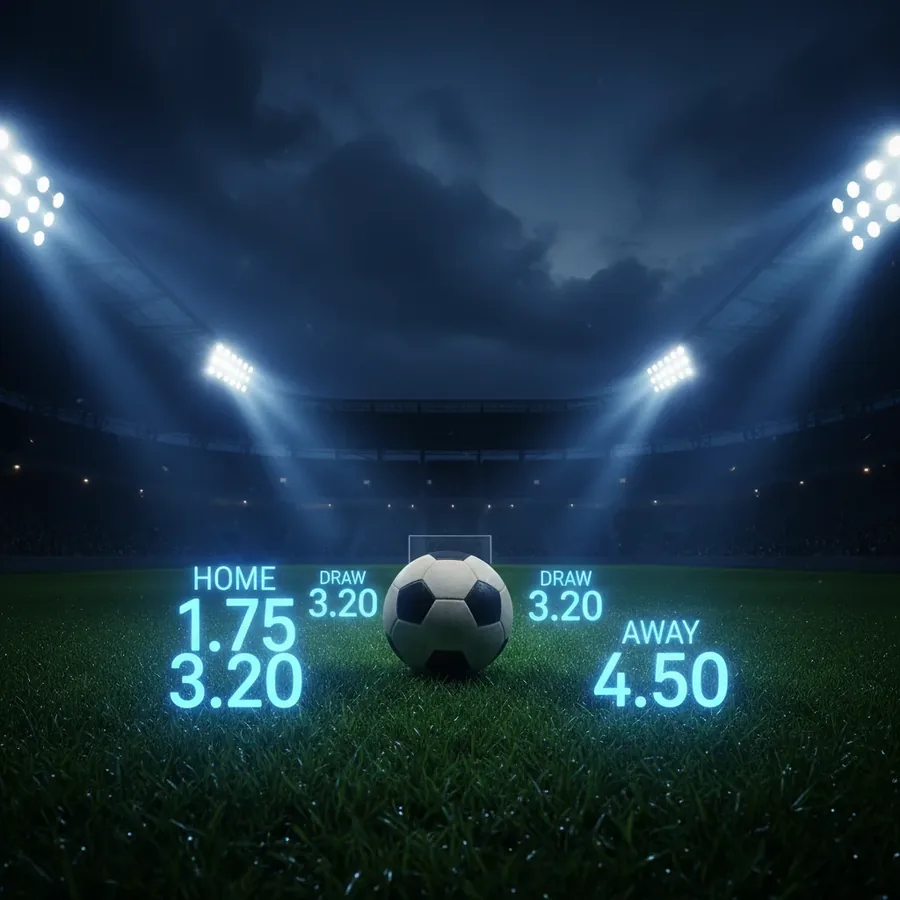
Both teams to score at 1.75 returns €17.50 on €10.00, a cleaner comparison because the market has only two sides. A system 2 from 3 with three picks at 2.00 and €10.00 staked pays €13.33 when two land, showing how a lower-margin main line can still be combined with higher-margin legs. Volleyball set results sit at the top of the 8-11% band alongside those wider markets.
Which Markets Dominate in Esports?
Esports events at major tournaments list 40–120 markets per match for CS2, Dota 2 and LoL, while small events offer only 10–25. That is a gap of roughly four to ten times, so the size of the tournament decides how deep a player can go on side bets before the board runs thin. A punter who wants anything beyond the plain match winner will usually find it only at the top tier.
CS2 carries a margin of 4–7% at top tournaments, while Dota 2 and its side markets sit at 6–10%. On €100.00 of stakes the difference is €4.00–7.00 against €6.00–10.00, so the cheaper of the two costs a player roughly €2.00–3.00 less per €100.00 wagered. LoL sits in the same band as CS2 at the elite level, which keeps the two titles close on price.
Two-way and three-way structures drive the count, and the number of markets per match is what separates a major from a minor. With 40 markets at a small event against 120 at a major, the same fixture can offer three times the choices depending on the stage. Players who follow only the top circuit therefore see the widest board and the tighter margin.
CS2 4-7% vs Dota 2 6-10%
At top CS2 tournaments the margin is 4–7%, while Dota 2 and its side markets run at 6–10%. On a €10.00 single that gap is €0.40–0.70 against €0.60–1.00 in theoretical cost, so the difference over a session adds up quietly. The tighter band belongs to CS2, and the wider one to Dota 2.
Market depth follows the same split: 40–120 markets per match at major tournaments, but only 10–25 at small events. A CS2 major can therefore price more than a hundred separate bets on one fixture, while a small Dota 2 event may offer a quarter of that. Fewer markets usually means fewer ways to spread a stake.
An accumulator shows the effect in money. Combining three selections at 1.50, 2.00 and 2.50 gives total odds of 7.50, so a €10.00 stake returns €75.00 with €65.00 net profit, but one wrong pick loses the whole stake. A higher per-leg margin makes that all-or-nothing structure more expensive to run. CS2 at 4–7% keeps more of the theoretical value in the player's hands than Dota 2 at 6–10%.
Handicap 3-5% vs Moneyline 4-6%
On an NBA game the handicap and over/under markets carry 3–5%, while the moneyline sits at 4–6%. On €100.00 of stakes that is €3.00–5.00 against €4.00–6.00, so the spread line costs about €1.00–2.00 less per €100.00 wagered. The tighter figure sits with the handicap.
An Asian handicap removes the draw and, on quarter lines, splits the stake across two handicaps. At AH −0.25 priced at 1.90, a €10.00 stake puts €5.00 on 0 and €5.00 on −0.5: a win returns €19.00, a draw returns €5.00 and a loss returns €0.00. That split is what makes the quarter line different from a plain head start.
Basketball also lists 150–250 markets per NBA game, including player props, so the handicap is only one line among many. A player who takes the 3–5% handicap instead of the 4–6% moneyline on the same game saves roughly €1.00–2.00 per €100.00 staked. The saving is small per bet but repeats across a season.
In-Play Table Tennis: Overlooking the 10% Margin
Table tennis matches list 20–40 markets, mostly set and point bets, and the margin runs at 6–10% before play. That is a narrower spread than the live figure, where the same sport often goes above 10%. The pre-match board is therefore the cheaper place to be.
Live betting adds 1–3 percentage points to the pre-match margin across the industry, with odds updating every second and an acceptance delay of 1–12 seconds, typically 3–8. On table tennis that pushes a 6–10% base above 10%. A €100.00 live stake can therefore cost more than €10.00 in theoretical terms, against €6.00–10.00 before the first serve.
The market count stays at 20–40 per match, so the depth does not grow to match the price. A player who wants set and point bets has the full board before the match and pays the lower figure; waiting for the rally to start raises the cost without adding options. Partial cash out does not fix that, since only a portion chosen with a slider is paid out and the rest keeps running at the original odds.
How Much Margin Do Round Bets Carry?
Round bets in boxing carry 9–13%, against 5–8% in the winner market on the same fight. On €100.00 of stakes that is €9.00–13.00 against €5.00–8.00, so a round bet costs roughly €4.00–5.00 more per €100.00 wagered. The exact round is the pricier side of the card.
The same pattern shows in MMA, where the winner market is 5–8% and method of victory is 8–12%. Both sports price the specific outcome higher than the plain result, and boxing sits at the top of the two at 9–13%. A player choosing between the two pays for the precision.
Market depth explains part of it: boxing lists 25–50 markets per fight, while MMA offers 30–60 depending on the place on the card. Favourites in boxing are often priced below 1.20, so a short winner bet has little room for a wide margin. Round bets keep the wider band because the outcome is harder to pin down.
Contact
Live - online chat
Banking









Providers












Jolly Sweeps Casino 2026